Traffic Report: Guangzhou, China
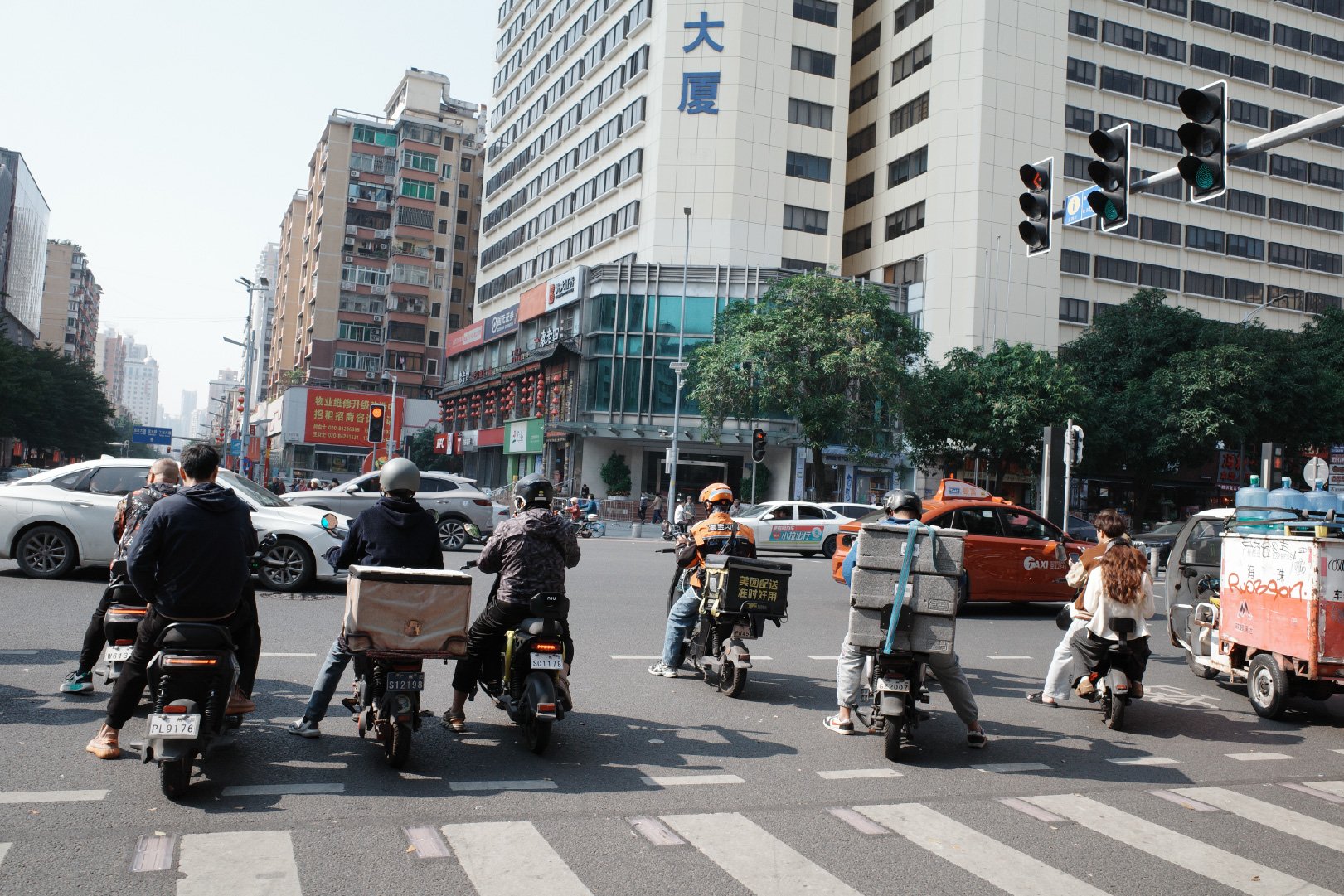
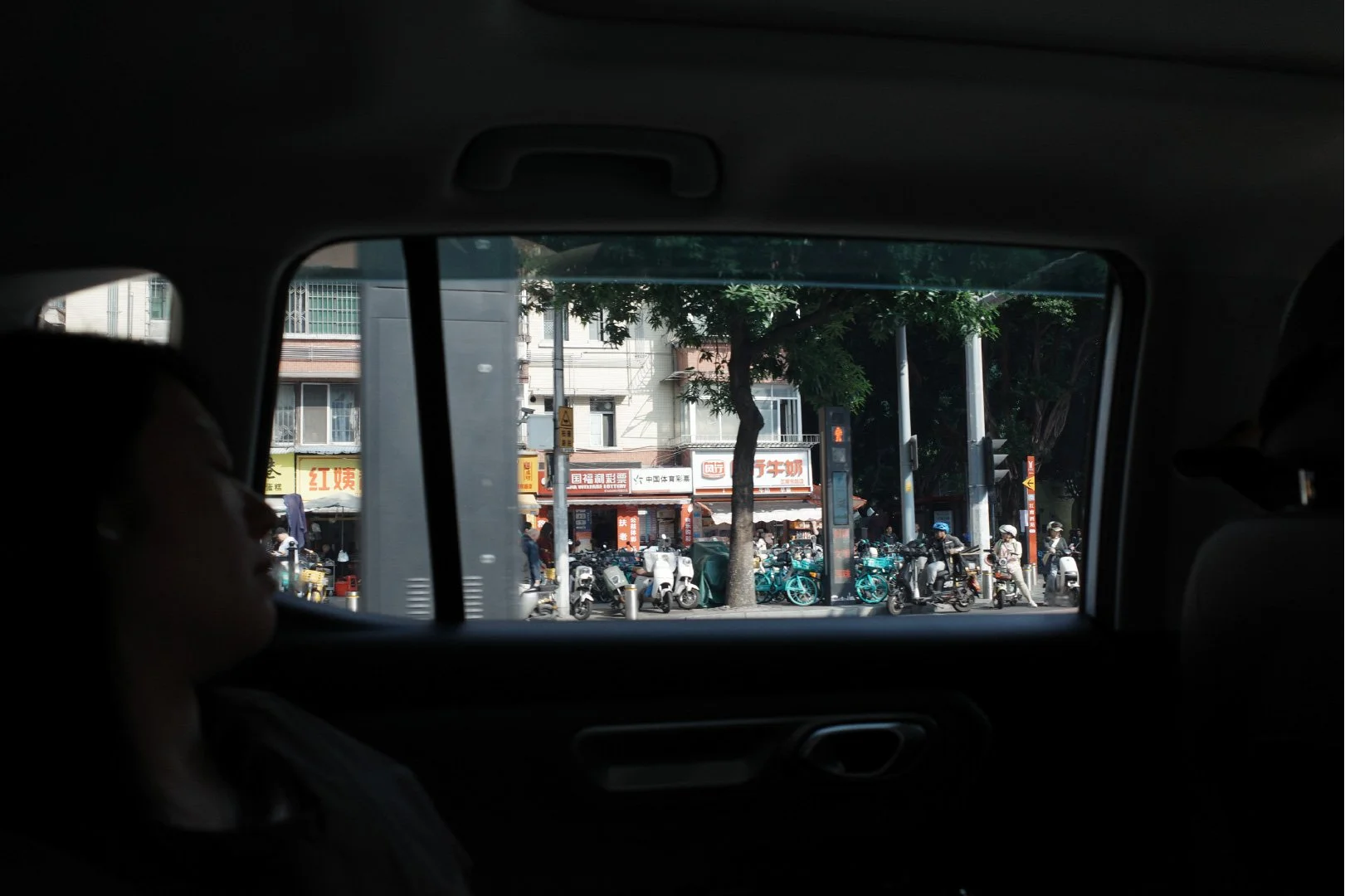
If I were to draw a diagram of traffic flow in Guangzhou, it would look like noodles—unruly, wavy, going wherever they please. Scooters, motorbikes, and bicycles spill across the streets in every direction. Despite the well-marked bicycle lanes, an elderly woman glides down the main road in her electric wheelchair, motorists trailing comically behind her.
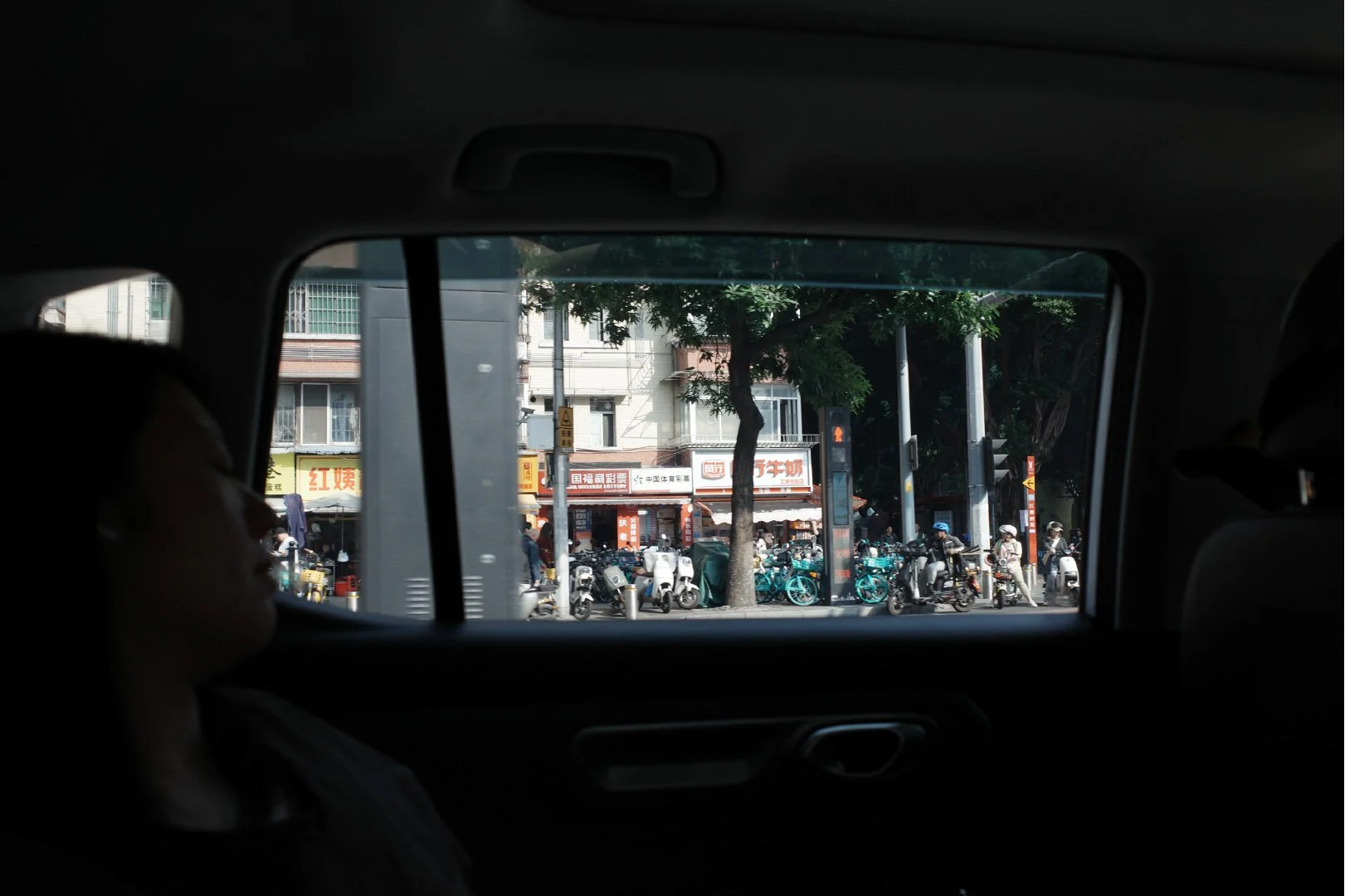
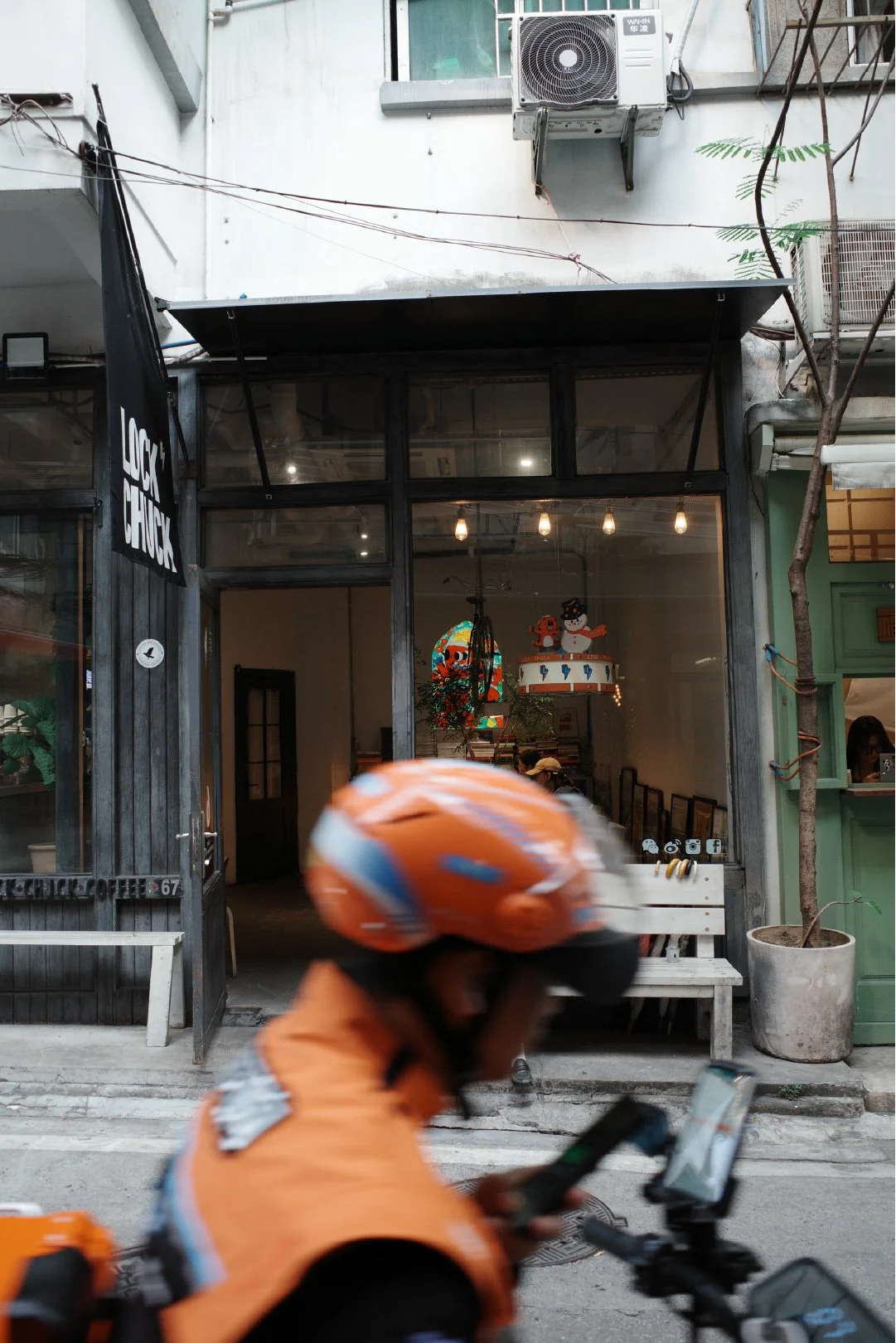
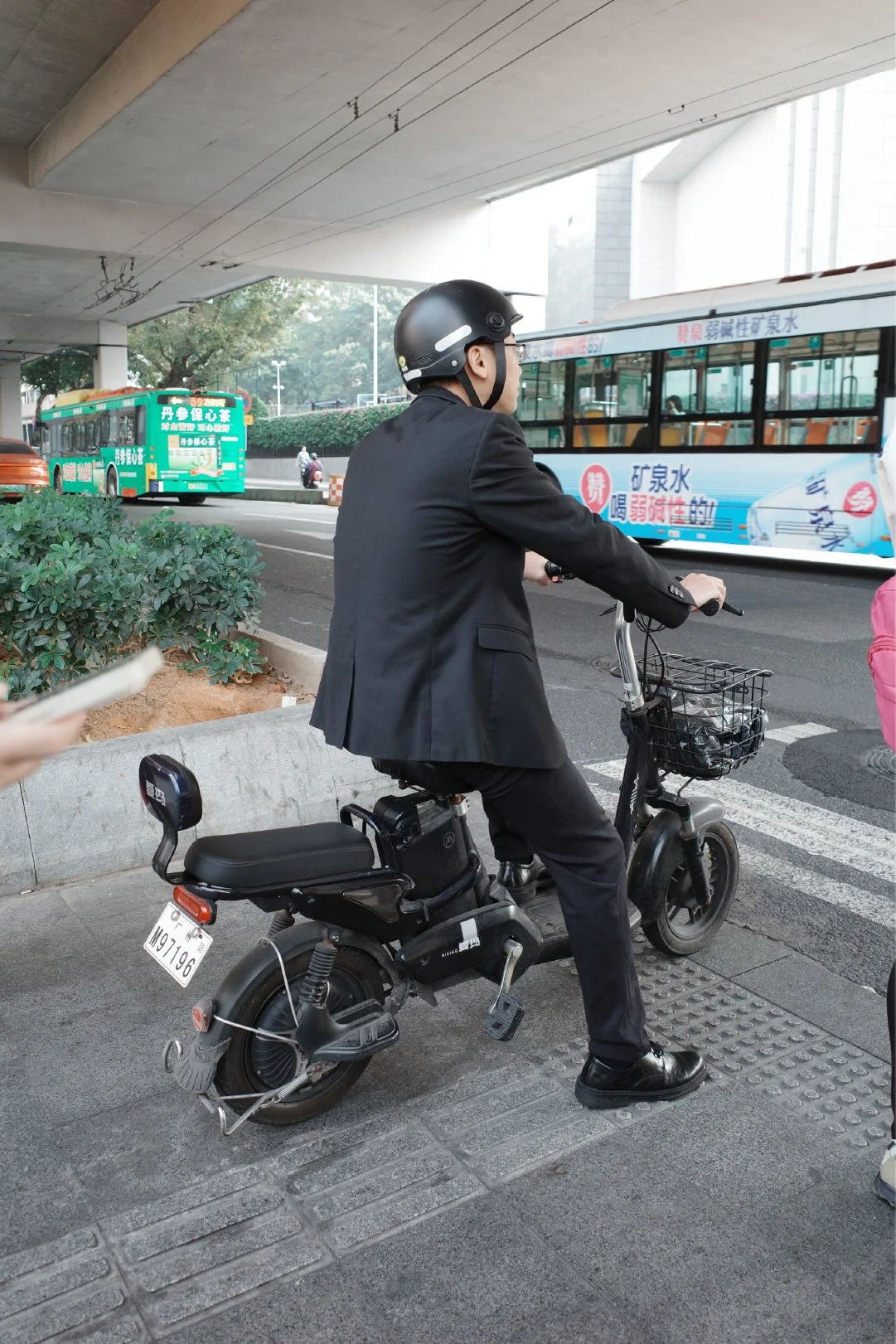
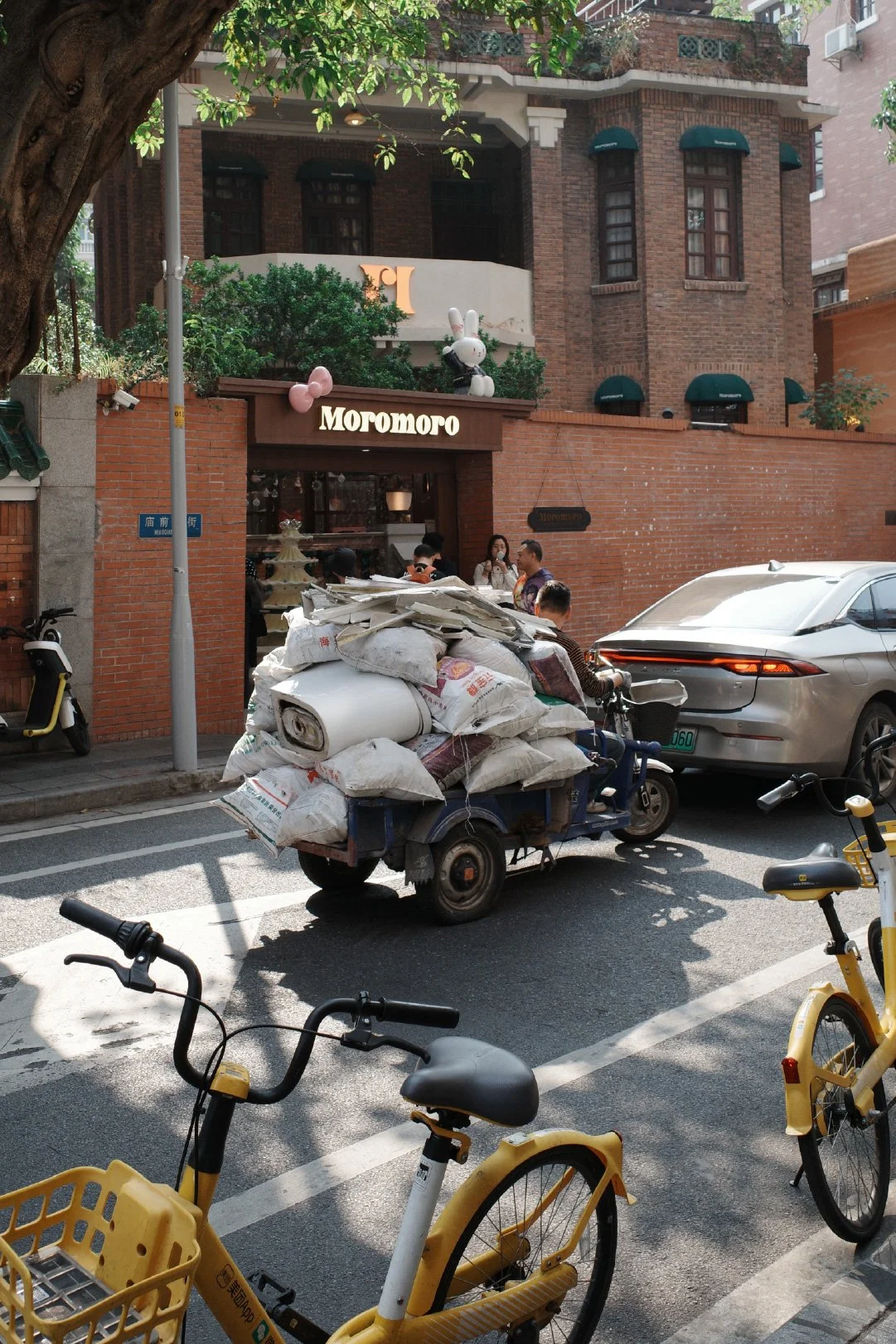
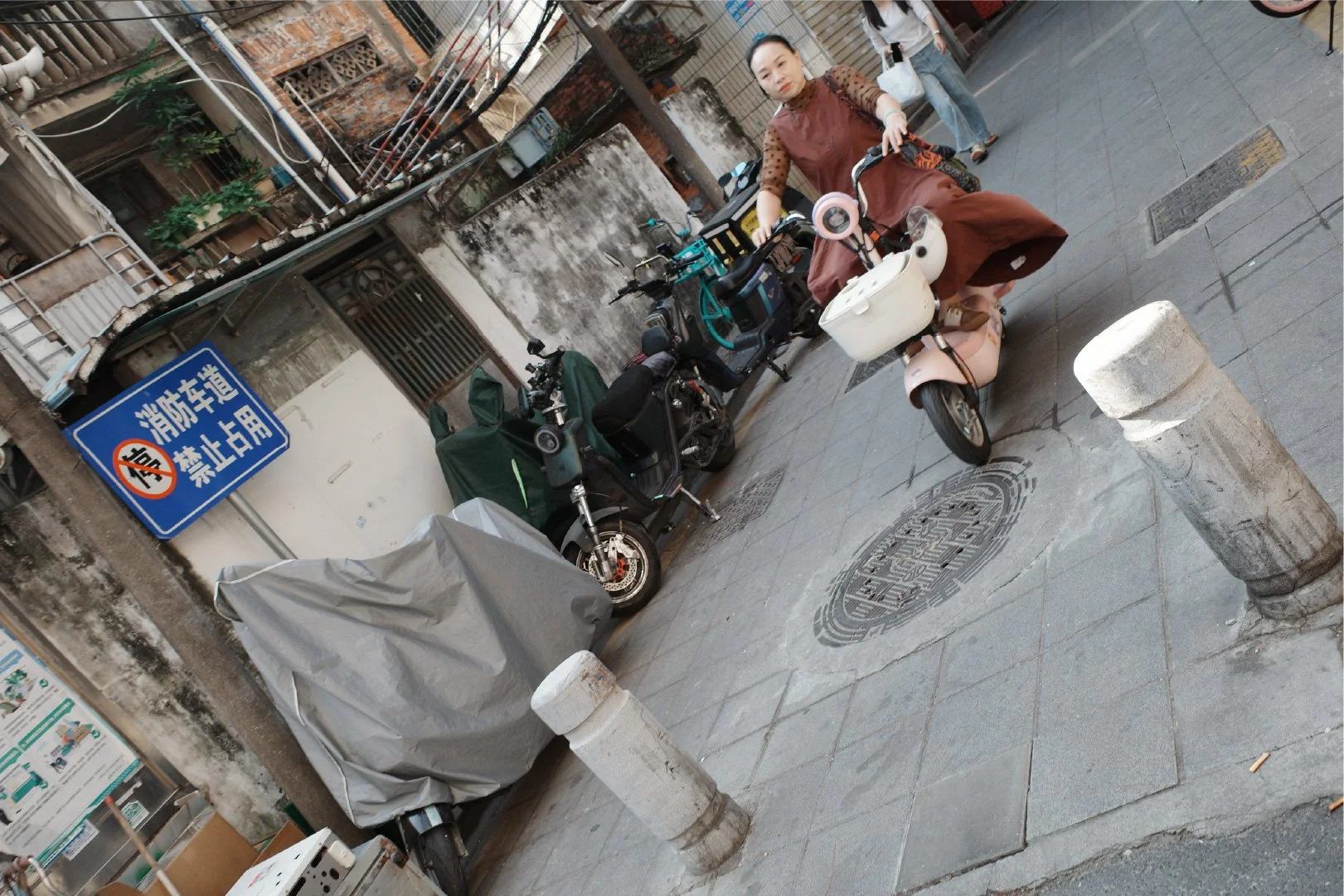
The everyday rhythm of Guangzhou’s streets sounds like a chaotic classical composition—one where traffic rules seem irrelevant (or never existed to begin with). Yet beneath the disorder lies a quiet calm, sustained by resourcefulness and an innate ability to improvise and adapt.
It is a street affair when a large MPV attempts to squeeze through a single-lane road, passing a truck with only inches to spare. The truck driver winds down his window and folds in his side mirror by hand. A jogger halts mid-stride, assuming the role of a traffic marshal, guiding the MPV through. Less helpful passers-by stop to watch, marvelling at the skilful manoeuvre as both vehicles emerge unscathed.
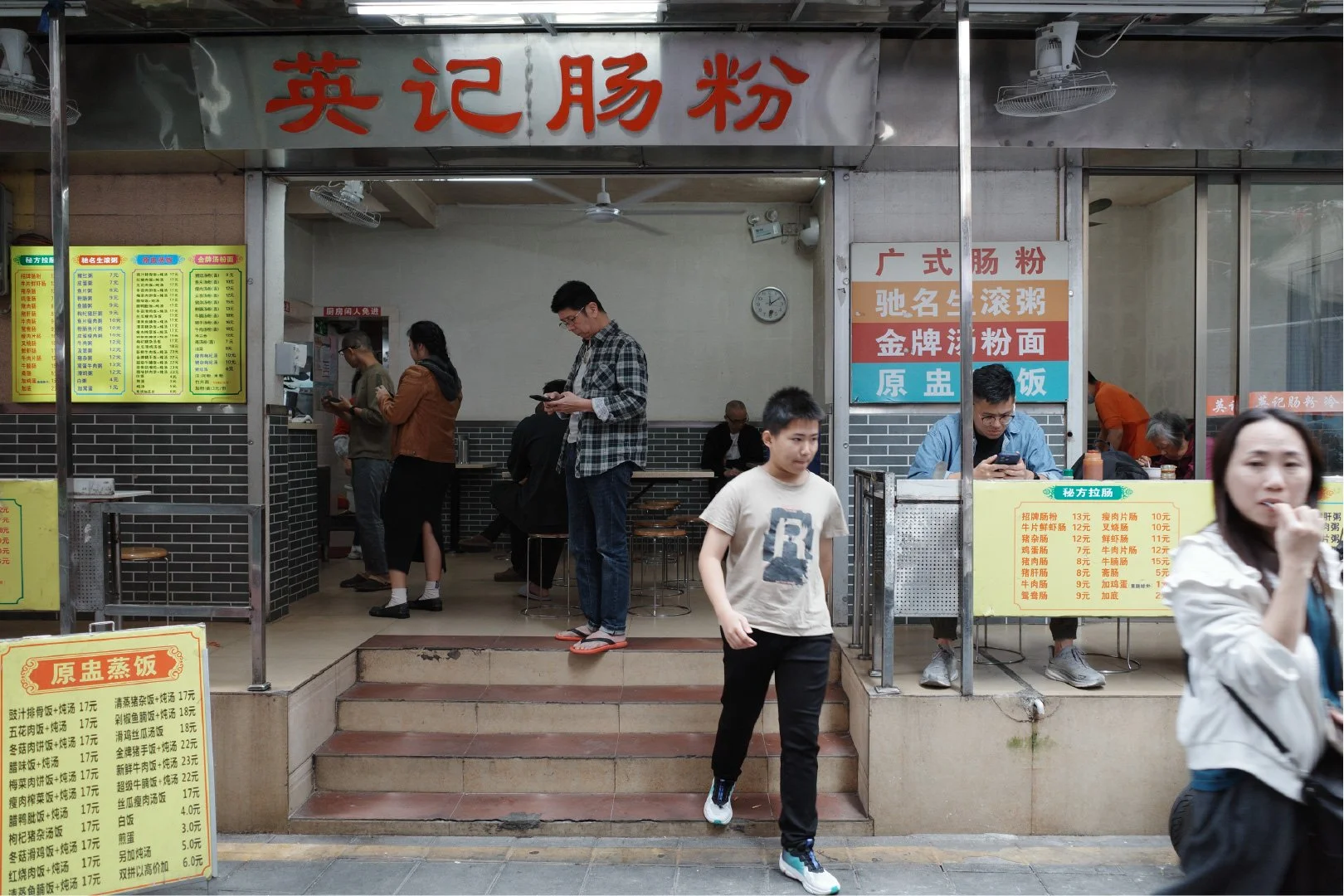
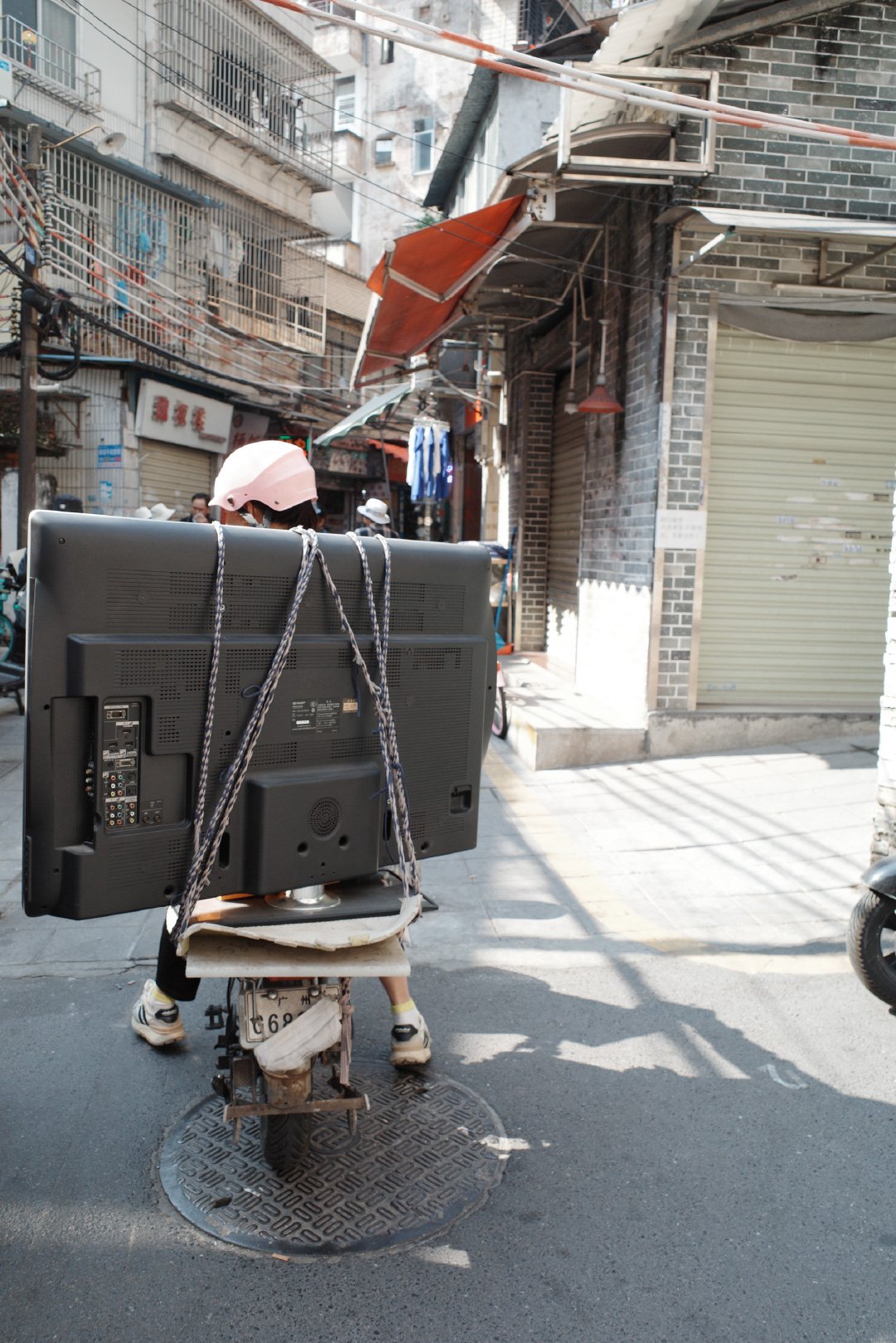
You can transport almost anything on two wheels here: cycling one-handed while dragging a suitcase with the other, or balancing a 55-inch television on the back seat, its surface area extended by a slab of marble tile. Unlike more sterile cities where street stalls have largely disappeared, commerce in Guangzhou remains everywhere—on the backs of trucks and spread across floor mats selling plants, bananas, vegetables, even the odd relic. Tailors and cobblers still work curbside, suggesting a city that repairs, with the skills to support that instinct.
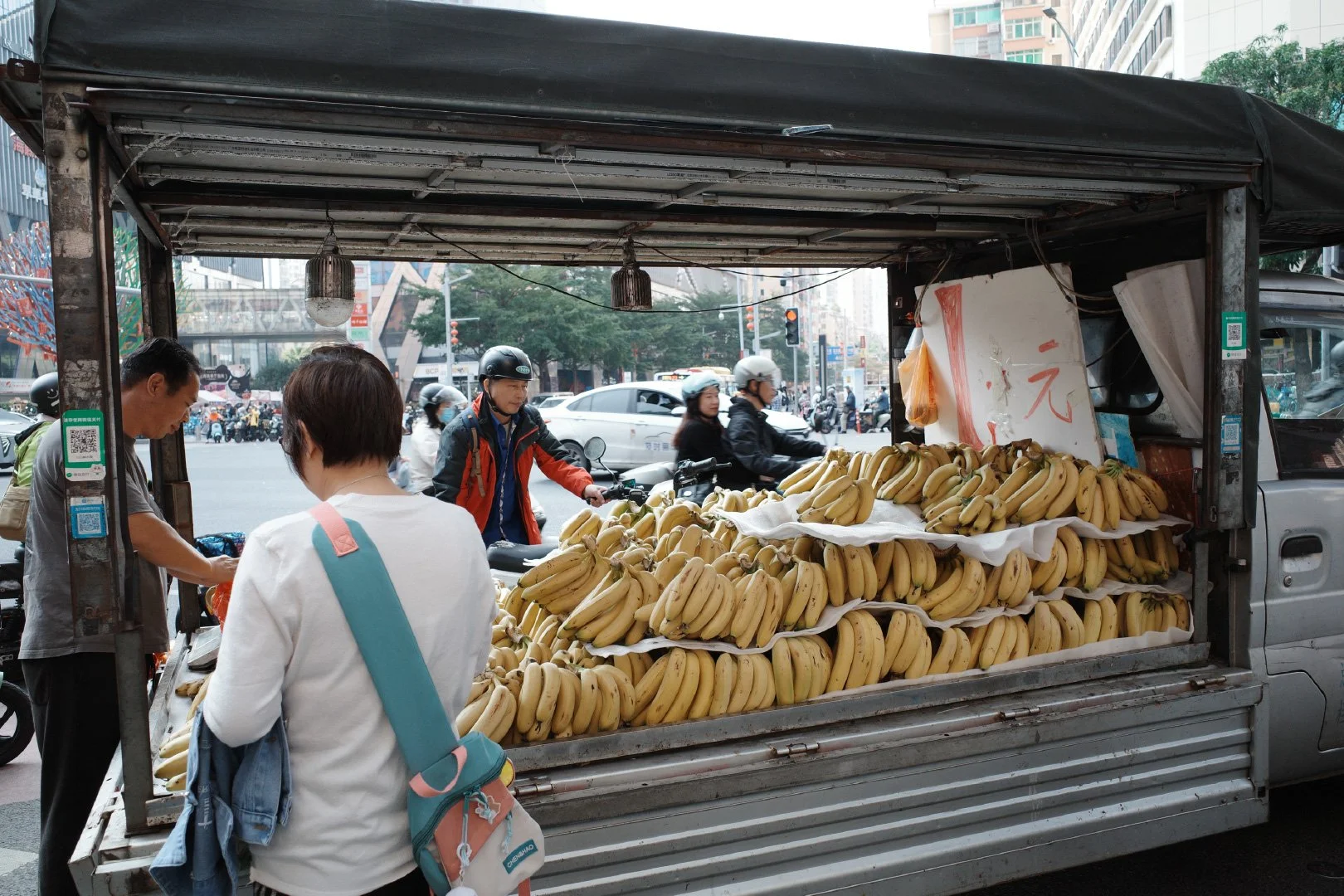
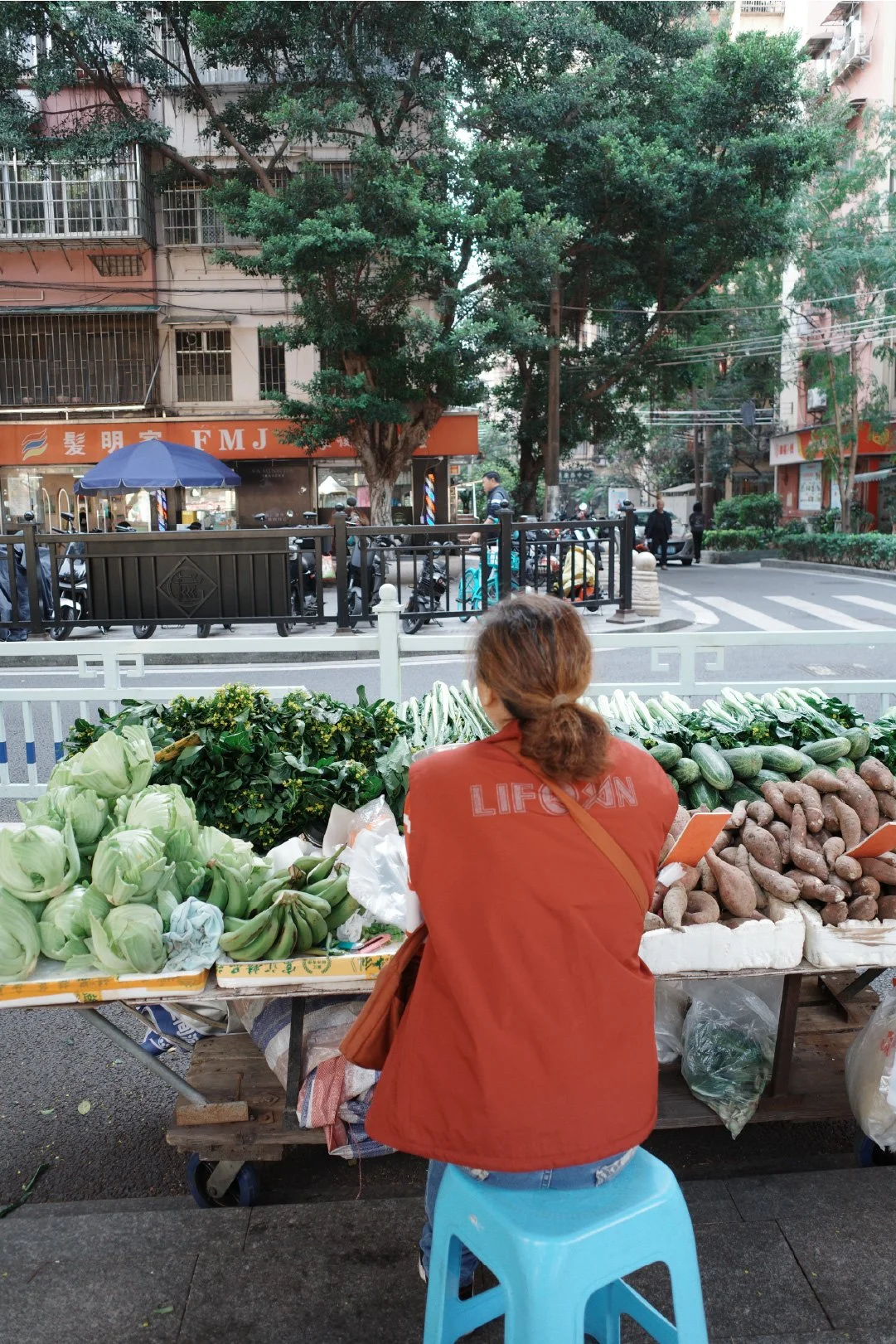
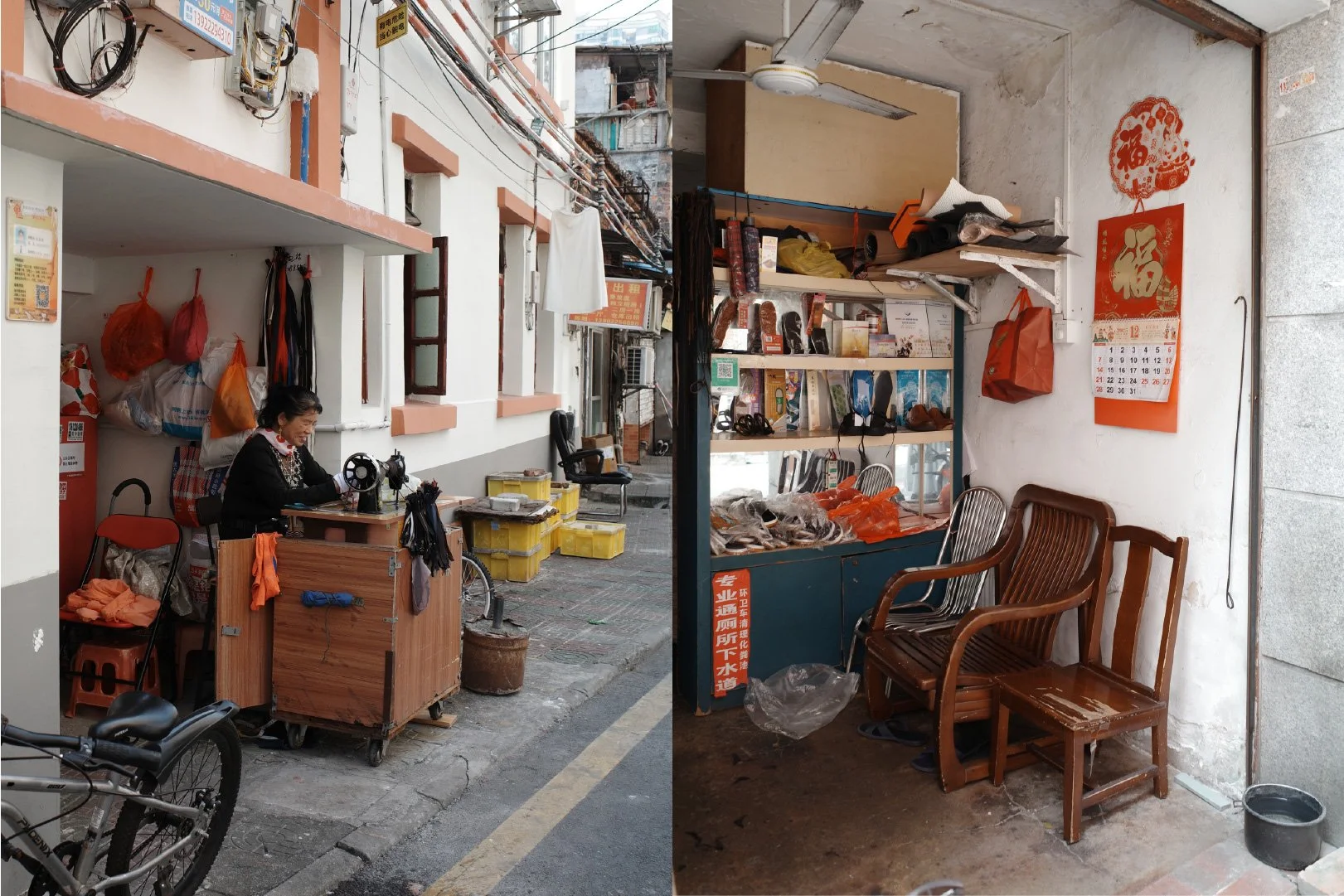
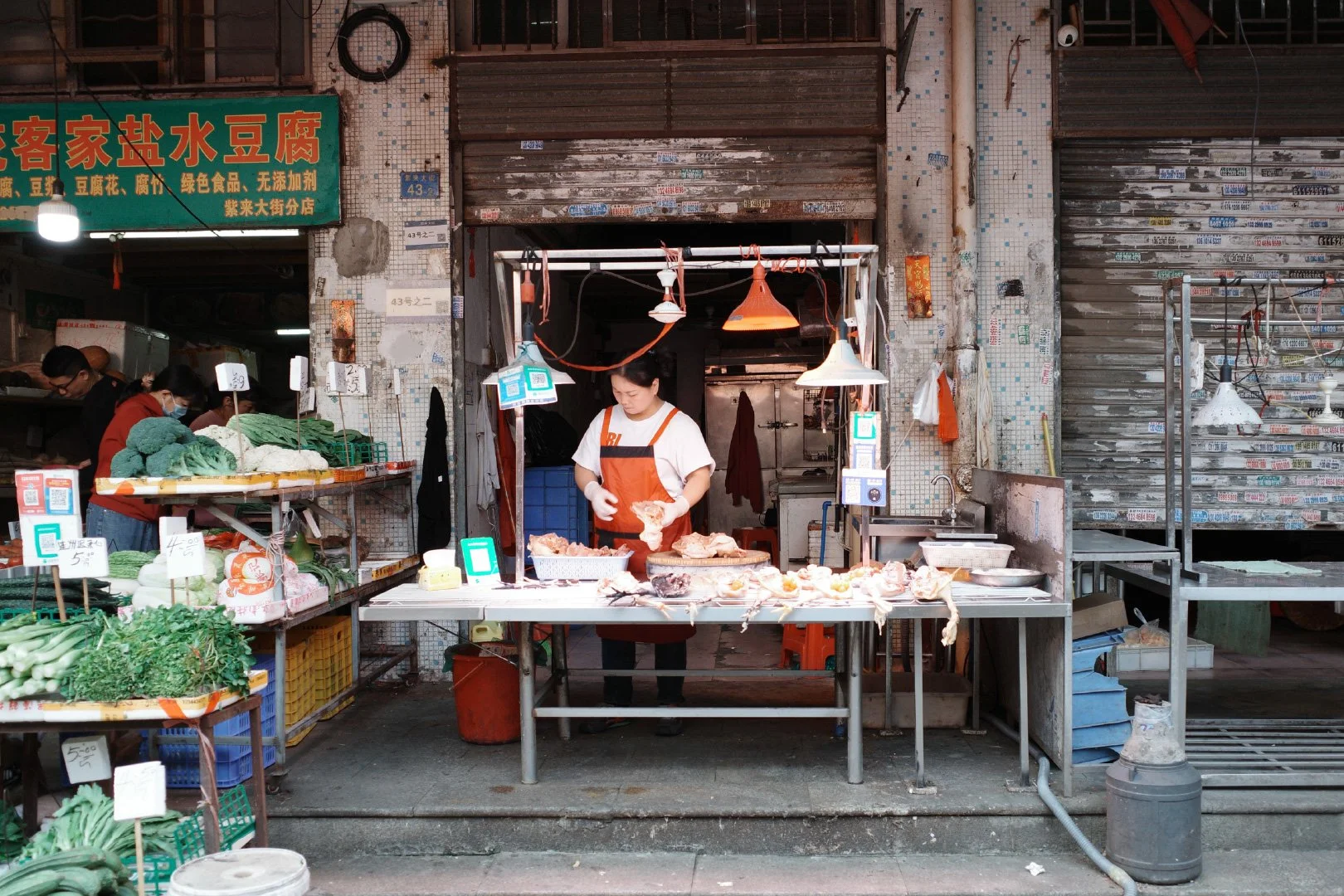
Despite the enticing street buffet, pedestrians must stay alert, as if they have eyes on the backs of their heads. There is always a two-wheeler approaching—from the left, right, front, back, or some diagonal direction. Many are delivery riders in brightly coloured jackets, ferrying goods from point to point.
At peak hours, food riders cannot afford to waste time queueing for lifts that stop on every floor of the city’s high-rises. One rider leaves the food in the corner of the lift—after pressing ‘27’—for the recipient to retrieve. Sardined commuters make space for the box of fried chicken, its greasy aroma stirring empty stomachs, as if it were just another respectable passenger heading upstairs. No one glares when someone enters with bulky, Santa-sized sacks. People shift and adjust, making room. There is a quiet understanding that everyone is simply trying to make a living.
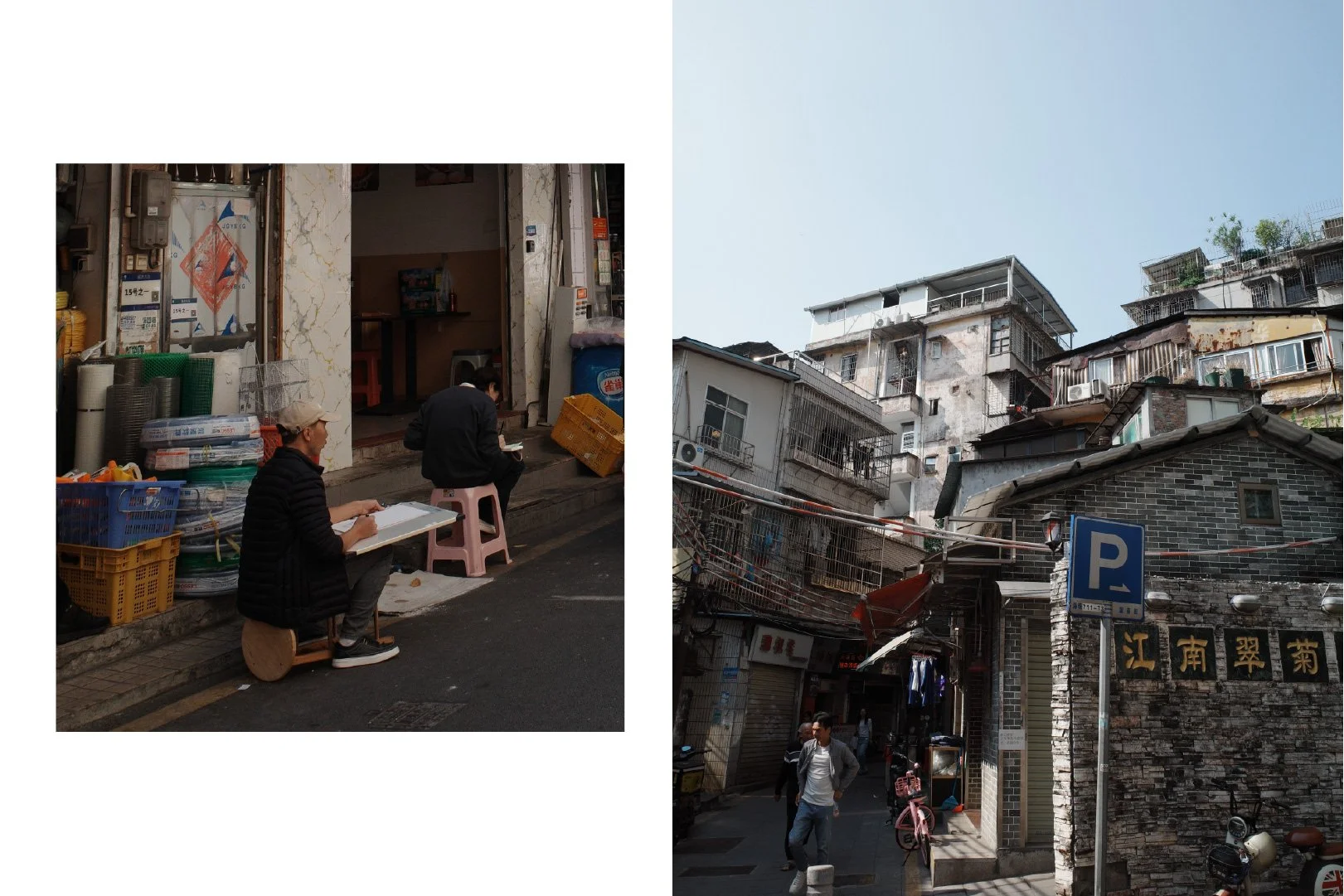
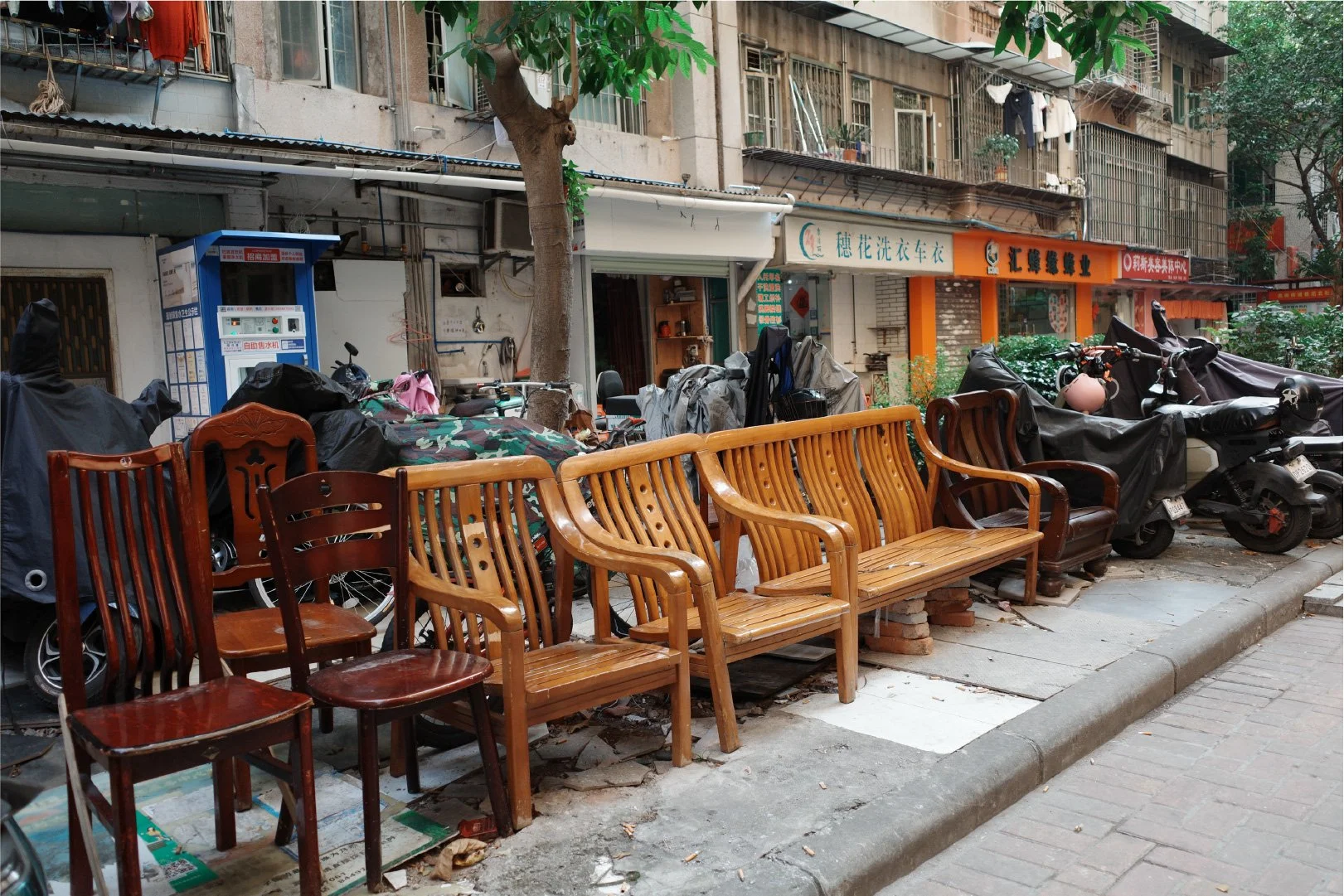
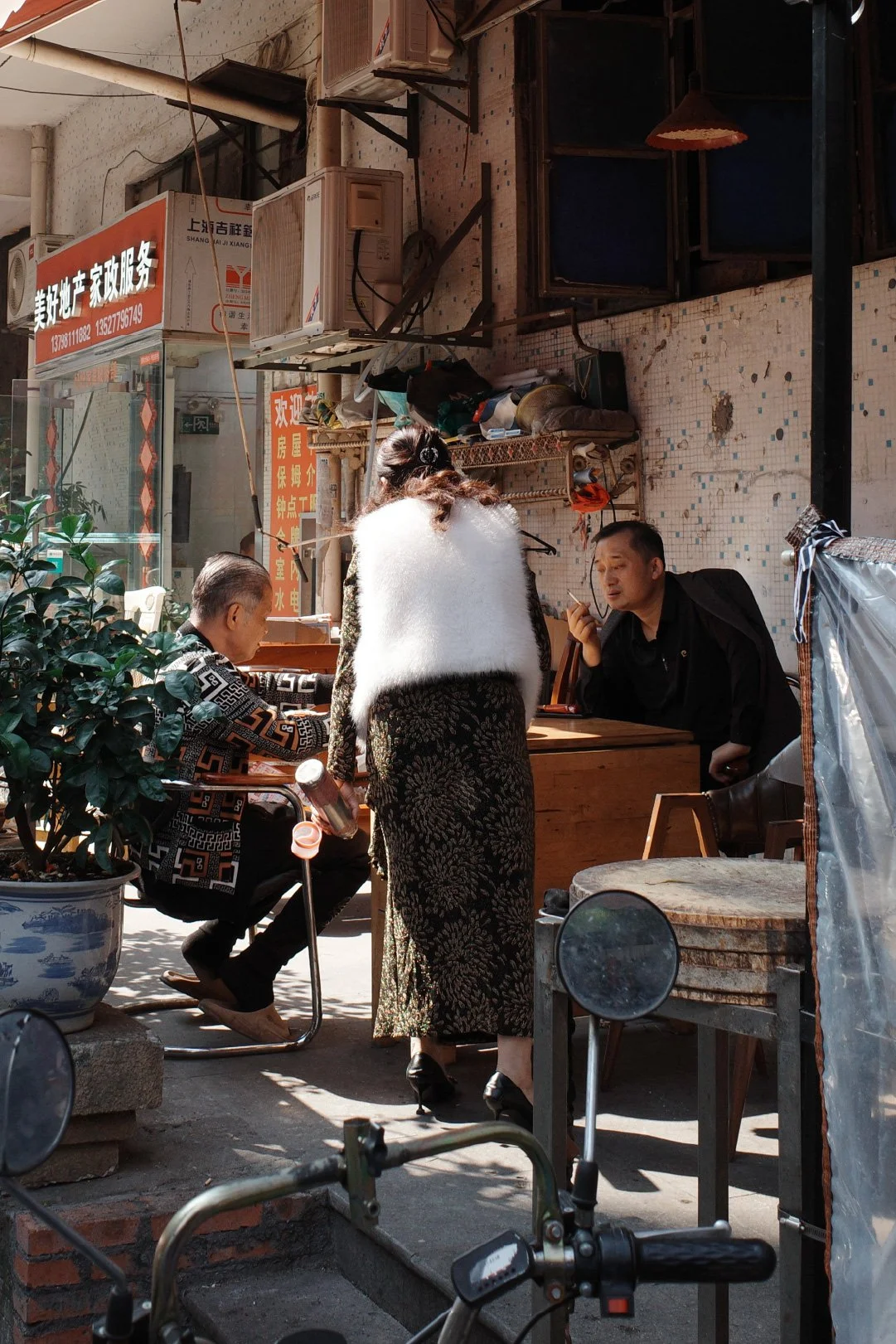
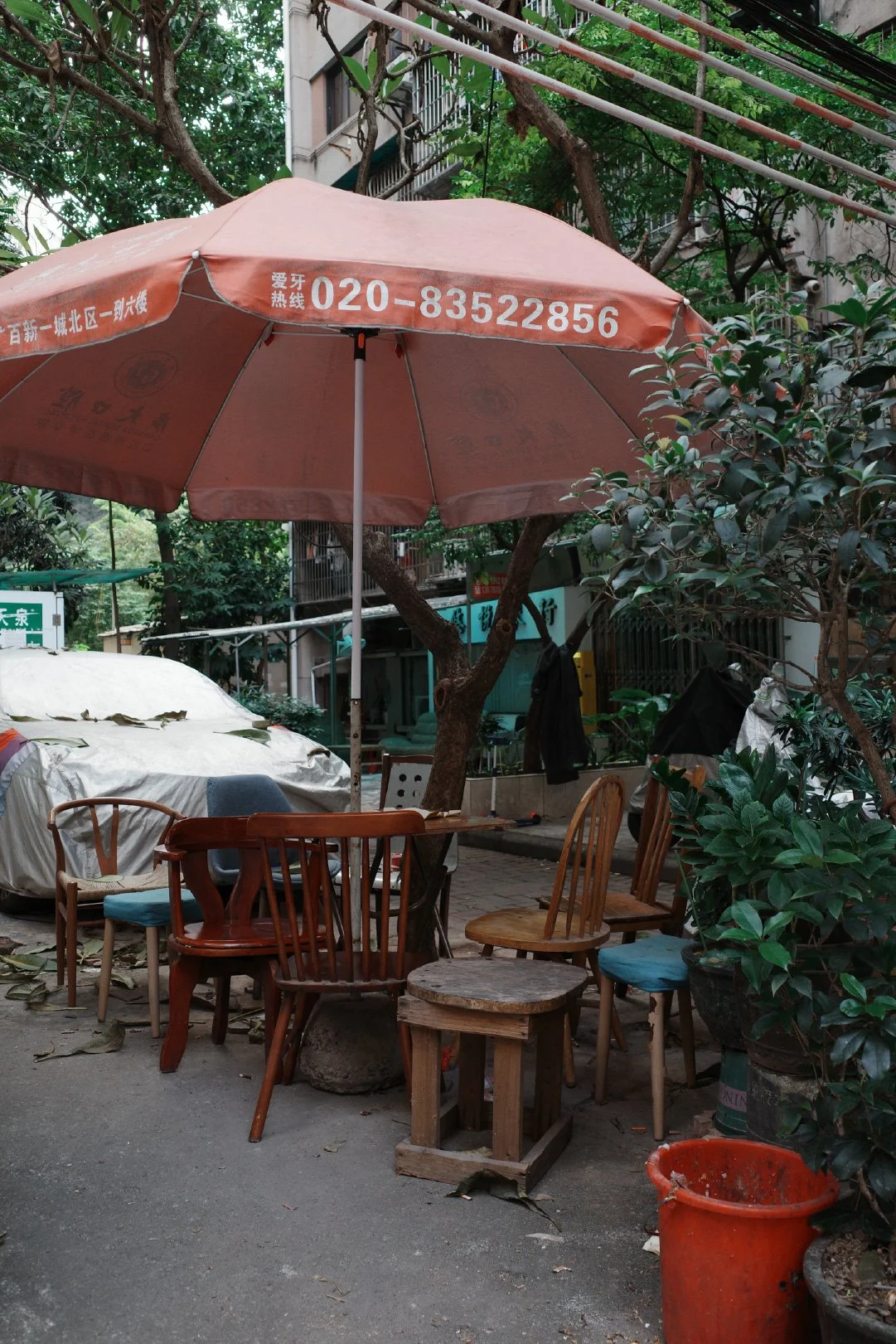
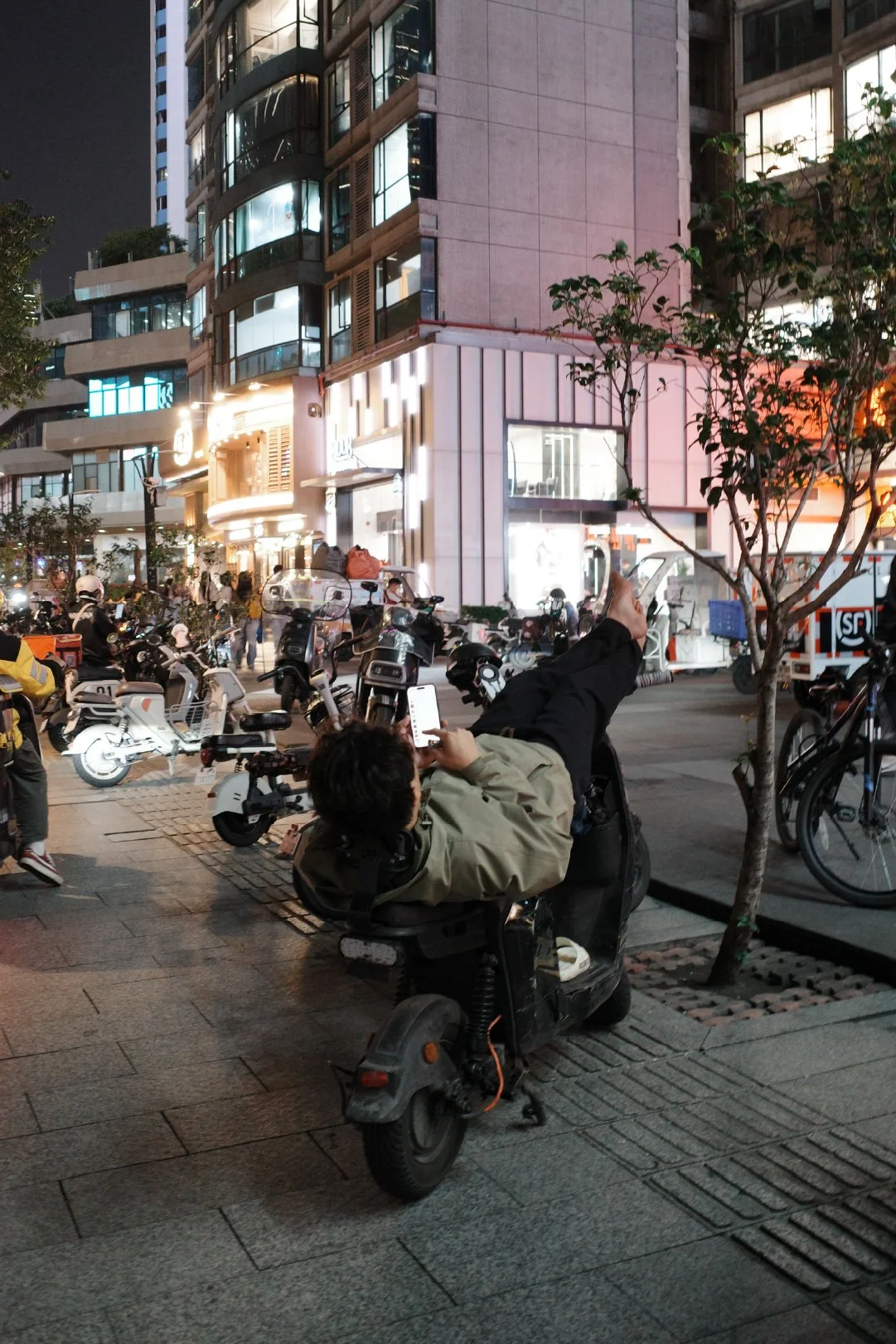
A DiDi driver tells me that people here make a living in order to live—to enjoy life. They work hard, but they also rest. Rest looks like 3am lamb skewers and hotpot by the roadside; sketching beloved neighbourhoods; mahjong games with neighbours; pausing whenever and wherever they want—lying across parked bicycles, handlebars doubling as leg rests. Self-made public infrastructure is everywhere: mismatched, pre-owned chairs are left out so anyone can sit and enjoy the weather. Foldable tables, scarred by storms and time, are tucked along the roadside, ready for an impromptu game of chess. None of this furniture is beautiful or designed for this purpose. The edges have splintered and there are broken parts. But they work—and that is enough.